
For most operations teams, the best order management software is NetSuite for finance-led enterprises, Zoho Inventory for small businesses that need affordable multi-channel tracking, and Extensiv Order Manager for brands routing orders across several warehouses, 3PLs and FBA. Each one fixes a different bottleneck. The comparison, buying checklist and pilot plan are below, so you can shortlist two or three tools and book demos.
TL;DR:
- Native order handling often suffices until multi warehouse accuracy, complex routing, or wholesale needs create costly errors; choose a system by bottleneck, not feature count.
- Subscription prices omit higher tiers, connector work, onboarding, and data cleanup; enterprise implementations take months, while entry level tools may launch in days or weeks.
- Pilot one channel and one warehouse, measuring fill rate, time per order, and oversells prevented; test returns, split shipments, connectors, and feature tiers during demos.
- For SKU margins, NetSuite and Brightpearl come closest because orders and accounting share a ledger; shipping tools show label costs, not storage or handling.
- Consider managed fulfillment when oversells persist or 3PL coordination and integration upkeep become burdensome; listed rates are $1.65 per DTC order and $25 per pallet monthly.
Table of Contents
- Which order management platforms deserve a demo?
- 1. What each shortlisted vendor does best
- How do you choose the right order management system?
- What do implementation and ownership costs look like?
- Where does an OMS sit in your tech stack?
- Who should shortlist what, and how should you pilot?
- What is the timeline from research to go-live?
- How do the shortlisted tools scale for growing DTC brands?
- Which tools show SKU profitability and real cost transparency?
- How do 3PL-specific order management features differ from general platforms?
- Practical mistakes to avoid when buying an OMS
- What if software is not the fix? Try managed fulfillment
- FAQ
- Sources
Which order management platforms deserve a demo?
Order management systems now act as orchestration engines. Analysts describe them as platforms that centralize inventory visibility and fulfillment logic rather than just recording transactions. That framing matters when you compare tools, because the right pick depends on where your orders break: shipping labels, inventory accuracy, routing, or finance.
| Platform | Best for | Starting price or published entry | Deployment size | Standout capability | Typical integrations | Typical implementation time |
|---|---|---|---|---|---|---|
| NetSuite | Ledger-level order and financial consolidation | Quote only | Enterprise | Single ledger for orders, inventory and financials | ERP, e-commerce, shipping | A more involved implementation |
| Brightpearl | Retail and wholesale teams that want accounting included | Quote only | Mid-market | Retail OS with built-in accounting | Storefronts, marketplaces, shipping | Varies by implementation |
| Cin7 | Multi-channel retailers who need accurate inventory | Tiered plans | SMB to mid-market | Inventory-first architecture, large integration library | Marketplaces, POS, shipping | Varies by implementation |
| Extensiv Order Manager | DTC brands routing across warehouses, 3PLs and FBA | Quote only | SMB to mid-market | Multi-node routing and replenishment analytics | Marketplaces, 3PL portals, FBA | Varies by implementation |
| ShipStation | Teams whose bottleneck is labels and carrier rules | Published starter pricing | SMB | Deep carrier and rate coverage | Carriers, storefronts | A relatively quick setup |
| Zoho Inventory | Budget-conscious multi-channel sellers | Published price ladder, permanent free plan | SMB | Transparent pricing | Storefronts, Zoho apps, shipping | A relatively quick setup |
| Veeqo | Teams that want low-friction shipping workflows | Free shipping plan, paid inventory | SMB | Free shipping plan | Storefronts, carriers | A relatively quick setup |
| Salesforce Order Management | Salesforce customers who want one order lifecycle | Quote only | Enterprise | Native Salesforce integration | Salesforce CRM, commerce | A more involved implementation |
| Shopify (Plus/Commerce) | Merchants already on Shopify | Plan-based | SMB to enterprise | Built-in routing inside Shopify | Shopify ecosystem | Weeks |
| Fluent Commerce | Complex distributed fulfillment networks | Quote only | Large retailers | Cloud-native distributed order management | Retail stacks, ERPs | A more involved implementation |
Quick snapshots of the three tools that anchor this list:
- NetSuite: an ERP with order management built in, suited to teams that want orders, inventory and financials in one ledger.
- Zoho Inventory: a low-cost entry point with a permanent free plan for small sellers.
- Extensiv Order Manager: purpose-built for sellers who split volume across warehouses and fulfillment partners.
For enterprise buyers, Gartner’s distributed order management listings are a useful filter for vendors like Fluent Commerce and others at that tier. Where analyst coverage exists, such as Everest Group’s OMS market research, it points toward cloud-native, API-first architectures.
1. What each shortlisted vendor does best
A 15-platform review from Netguru found the right OMS speeds up processing, cuts mistakes and improves fulfillment accuracy. Here is what to expect from each tool in a demo.
NetSuite is finance-first. It fits enterprises that want order-to-cash consolidation in one system. We could not find a published price, so expect a quote, and budget for a long implementation.
Brightpearl works as a retail operating system with accounting included. Retail and wholesale teams that want orders, inventory, fulfillment and the books in one place get the most from it.
Cin7 is built around inventory accuracy across channels. Its integration library is wide, which helps multi-channel retailers who keep overselling. Check which tier carries the connectors you need, because pricing is tiered.
Extensiv Order Manager is the multi-node routing specialist. If you send orders to a mix of warehouses, 3PLs and Amazon FBA, its replenishment analytics help you decide what to ship where.
ShipStation is shipping-led. It wins when your pain is label creation, carrier selection and rates. Starter pricing is published, and entry cost is low.
Zoho Inventory keeps the price ladder clear and offers a permanent free plan for small sellers. It suits teams that need multi-channel tracking without an enterprise budget.
Veeqo is shipping-first with a free shipping plan. Inventory features cost extra, so price the combined setup before you commit.
Salesforce Order Management belongs to businesses already running Salesforce. The value is one lifecycle across order, service and fulfillment.
Shopify (Plus/Commerce) has built-in order routing and multi-channel handling. Merchants already on Shopify can often get a long way before buying a separate OMS.
Fluent Commerce is distributed order management for complex, multi-node retail networks. It is aimed at large retailers rather than small brands.
A second layer of vendors shows up in analyst lists and review roundups. G2’s compilation names Katana, Webgility and others for different needs, and the lesson is consistent: different tools solve different bottlenecks.
How do you choose the right order management system?
Start with the break point, not the feature list. Capterra’s practitioner analysis notes that many brands can rely on native e-commerce order handling until they hit scaling thresholds such as multi-warehouse accuracy, complex EDI or advanced routing. If you are not there yet, you may not need a new system.
Map your pain to a tool type:
- Labels and carrier rules point to ShipStation or Veeqo.
- Overselling and channel sync point to Cin7 or Brightpearl.
- Multi-node routing points to Extensiv Order Manager or Fluent Commerce.
- Finance consolidation points to NetSuite.
Then run this checklist:
- Confirm the integration list covers your storefront, marketplaces and shipping carriers.
- Test how it behaves across multiple warehouses.
- Check routing rules and priority logic.
- Review returns handling end to end.
- Look at reporting and replenishment tools.
- Ask about account management and SLAs.
Ask every vendor these demo questions:
- How do you prevent oversells when two channels sell the last unit?
- Which connectors are native and which are partner-built?
- How do routing rules resolve conflicts?
- What does a split shipment look like in the interface?
- How are returns restocked and reported?
- Which features sit behind higher tiers?
- What does onboarding include, and what costs extra?
- Can you share references from customers of our size?
- What happens to our data if we leave?
Pro Tip: Size your pilot to one channel and one warehouse, and measure fill rate, time per order and oversells prevented before you roll out wider.
What do implementation and ownership costs look like?
Headline subscription price rarely tells the whole story. Capterra’s category guidance warns that the advertised price commonly understates total cost of ownership because real needs push you into higher-tier plans, connector engineering and onboarding fees.
Expect these timelines:
- Quick-start tools: typically require less setup than enterprise platforms, though timing depends on the tools and operation.
- Mid-market platforms: timing depends on how many channels and warehouses you connect.
- Enterprise OMS: several months. Capterra’s vendor listings show that enterprise platforms often need months of setup and technical resources.
Hidden costs to put in writing:
- Features gated behind higher tiers
- Connector engineering for channels without native support
- Onboarding and training fees
- Data cleanup and product catalog migration
- Customization of workflows
To budget well, require a line-item quote for integrations and training, and ask for references from similar customers. Over-tooling is a real risk: experts warn that buying enterprise-scale platforms before you need them leads to long implementations and excess cost.
Where does an OMS sit in your tech stack?
Keep responsibilities clear. The OMS orchestrates orders. The WMS runs warehouse execution. The ERP holds the financials. A 3PL portal often covers the warehouse side for you.
Integrations to verify before you sign:
- Shopify or other storefront connectors
- Amazon seller and FBA connectors
- ERPs and accounting such as NetSuite and QuickBooks
- WMS and 3PL portals
- Shipping APIs and carrier accounts
Pair the bottleneck with the fix:
- Overselling across channels: an inventory-first OMS, plus clean event-driven integrations.
- Inventory that never matches the warehouse: a reconciliation process, covered in our guide to inventory software for SMBs.
- Labels eating hours each day: a shipping-led tool.
- Several warehouses and no routing logic: a multi-node router.
Who should shortlist what, and how should you pilot?
Shortlist by profile. Small sellers: Zoho Inventory, ShipStation or Veeqo. Multi-node DTC brands: Extensiv Order Manager or Cin7. Finance-led enterprises: NetSuite or Salesforce Order Management.
Run a pilot long enough to assess orders processed, oversells, and time per order. Shortlist two or three vendors, schedule demos, and consider a 3PL pilot if software keeps hitting the same wall.
What is the timeline from research to go-live?
Plan the project in phases so nothing stalls.
Weeks 1 to 2: research. Document where orders break, list channels and warehouses, and set a budget range.
Weeks 3 to 4: shortlist and demos. Narrow to two or three vendors and run the demo questions above with real order examples.
References and quotes. Collect line-item quotes and talk to similar customers.
Weeks 7 to 10: setup. Connect channels, migrate your catalog and configure routing. Simple tools finish sooner; enterprise projects run much longer.
Pilot. Run one channel and one warehouse, and watch your KPIs.
Go-live. Expand channel by channel, with the old process available as a fallback until the numbers hold.
How do the shortlisted tools scale for growing DTC brands?
Growing brands usually face challenges from more channels, more locations and more exceptions.
- Channels: Cin7 and Brightpearl are built for multi-channel growth, while Shopify’s native tools cover merchants who sell mostly through one storefront.
- Locations: Extensiv Order Manager and Fluent Commerce handle routing across nodes, a need that can arise as you add warehouses or 3PLs.
- Exceptions: wholesale, bundles and split shipments stress simple tools first. Test these in the demo, not after signing.
Small tools such as ShipStation, Zoho Inventory and Veeqo are easy to adopt but may outgrow you once you add warehouses. Enterprise tools scale further, but their cost and setup time can outweigh the benefit for a small brand. Plan for your expected growth, rather than overbuilding for a distant future.
Which tools show SKU profitability and real cost transparency?
Most order management tools report revenue, units and fulfillment status. Fewer show true contribution margin per SKU once you include storage, pick and pack, shipping and returns. Finance-first platforms like NetSuite and Brightpearl come closest because orders and accounting share a ledger. Shipping-led tools show label costs but not storage or handling.

Ask each vendor: Can I see margin by SKU after fulfillment costs? Can I export order-level cost data? Does reporting separate returns from net sales? If the answer is no, pair the OMS with a process that does. Our team provides SKU profitability analysis as part of fulfillment, so brands can see which products to scale or drop. When costs live in several vendors’ invoices, margins stay hidden.
How do 3PL-specific order management features differ from general platforms?
General OMS platforms orchestrate orders across channels. A 3PL’s system focuses on what happens inside the building: receiving, storage, pick, pack, ship and returns, with live inventory and billing tied to each action.
The differences that matter:
- A 3PL portal shows warehouse inventory in real time, not a synced estimate.
- Billing lines up with physical activity, such as per pallet, per order and per prep unit.
- Retail prep, kitting and returns processing run inside the same workflow.
- You skip the connector engineering, because the 3PL maintains channel integrations.
General platforms win when you run your own warehouses or need cross-vendor orchestration. A 3PL system wins when you want to stop managing the operation. Our guide on when a 3PL beats buying WMS software walks through that decision.
Practical mistakes to avoid when buying an OMS
Most failed projects follow the same pattern: a tool bought for features the team never uses, and an integration budget that was never real. Rank your integrations first, then pick the tool. Measure before and after, so the pilot proves value instead of feeling like it did. If the same problems return after a software purchase, the lever may be operational, not technical, and outsourcing can remove the complexity. For brands bundling and packing at volume, this UK guide to bulk order fulfilment shows the prep work involved.
— Claudio Saenz
What if software is not the fix? Try managed fulfillment
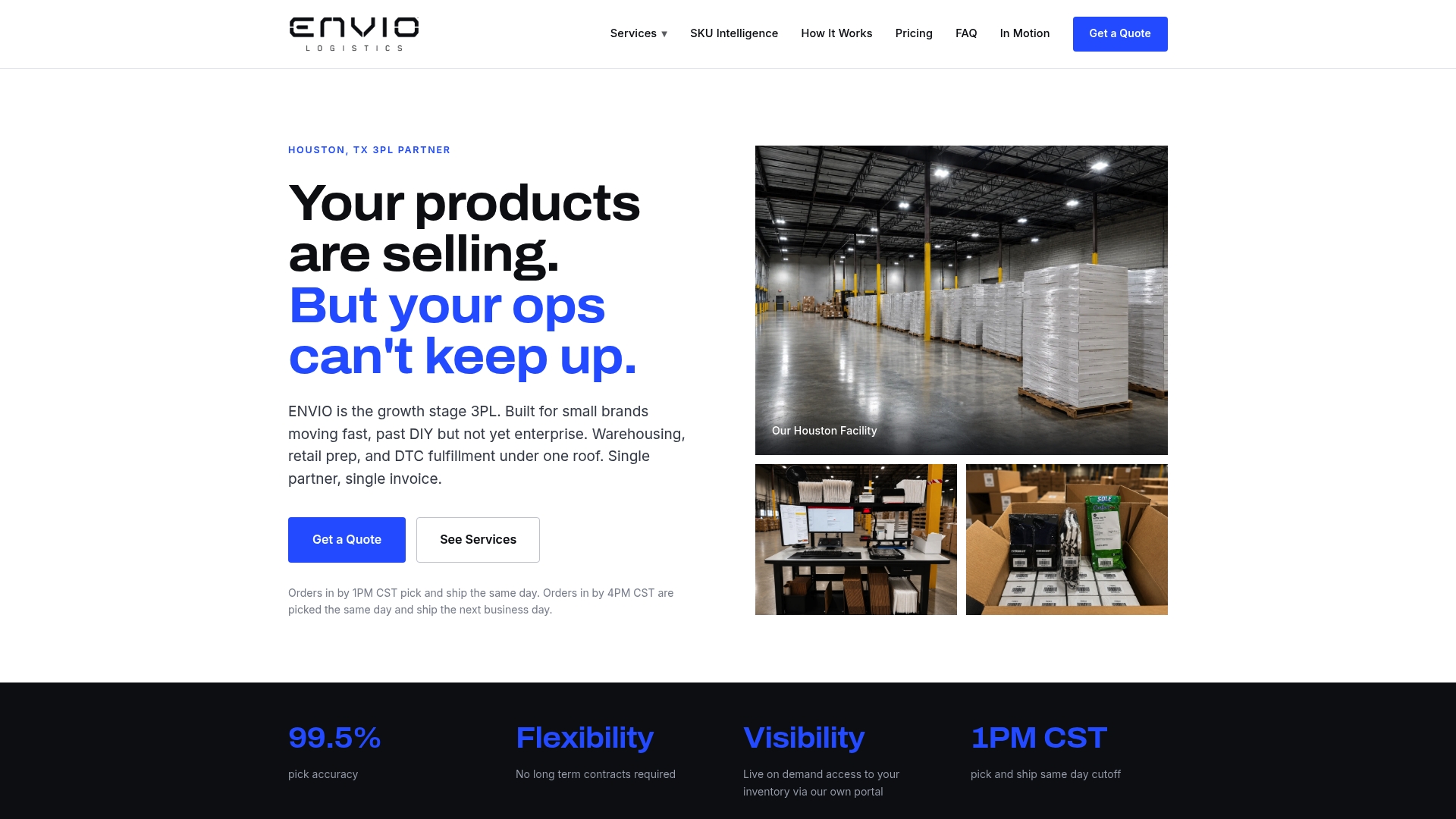
Software cannot move boxes. If oversells persist, you coordinate several 3PLs, or you want to stop maintaining integrations, a managed 3PL may beat another tool. We fulfill for small and mid-sized brands that have outgrown DIY logistics but are not ready for enterprise systems.
- DTC orders at $1.65 per order, with same-day shipping available
- Live inventory portal access
- SKU profitability analysis, so you know what to scale or drop
- Standard pallet storage at $25 per month per pallet
- No long-term contracts
Tell us your SKU count and order volume, and we will quote it. See our services and pricing or request a quote to start a pilot.
FAQ
What software is used for order management?
Businesses use dedicated OMS platforms, ERPs with order modules, or shipping-led tools, depending on size. Common examples include NetSuite, Brightpearl, Cin7, Extensiv Order Manager, ShipStation and Zoho Inventory.
Which OMS is best?
It depends on where your orders break. NetSuite suits finance-led enterprises, Zoho Inventory suits small multi-channel sellers, and Extensiv Order Manager suits brands routing across several fulfillment nodes.
Do small businesses need an order management system?
Not always. Native e-commerce order handling often works until you hit multi-warehouse accuracy, complex routing or wholesale needs. Add an OMS when those problems start costing you money.
How long does OMS implementation take?
Shipping-led and entry-level tools can run in days to weeks. Enterprise platforms often take several months because of setup and technical resources.
When is a 3PL better than more software?
When oversells keep happening, you juggle several fulfillment partners, or you want to stop managing integrations. A 3PL absorbs the warehouse work and the connectors together.
Sources
- Globenewswire
- 7 Best Order Management Software for Small Business | Capterra
- 15 Best Ecommerce Order Management Software Tools in 2026
- Best Distributed Order Management Systems Reviews 2025 - Gartner
0 comments