
For light, brand-forward shipments, crumpled kraft paper wins. For medium-weight, high-volume orders, air pillows deliver the lowest cost per cubic foot. Heavy or fragile items need foam rolls or custom inserts. If compostability is the priority, cornstarch peanuts or molded fiber close the gap. Keep void fill under roughly one-third of box volume, weigh lifecycle cost against upfront price, and a fulfillment partner like Envio3pl can apply these rules at scale.
TL;DR:
- Air pillows are the most cost-effective void fill for high-volume orders with medium-weight items, due to their low price per cubic foot.
- Properly right-sizing boxes to keep void fill under one-third of volume reduces extra shipping costs and material waste.
- Foam inserts and honeycomb paper provide superior protection for heavy or fragile items, with foam inserts offering precision for high-value products.
- Composted alternatives like cornstarch peanuts are suitable only in dry environments, as they dissolve in humidity and are less durable.
- Standardized material choices based on SKU weight and fragility, combined with consistent packing techniques, lower damage rates and improve fulfillment efficiency.
Table of Contents
- What Void Fill Actually Does Inside the Box
- Paper-Based Void Fill: Kraft, Crinkle, Tissue, and Honeycomb
- Air Pillows, Air Cushions, and Bubble Wrap
- Foam Options: Peanuts, Rolls, Blocks, and Custom Inserts
- Molded Fiber and Bio-Based Fills on the Horizon
- How to Choose Void Fill for Your Shipments
- Right-Sizing, Placement, and the Packer’s Checklist
- Cost and Sustainability at a Glance
- How Envio3pl Puts These Rules Into Practice
- What the Packing Floor Actually Teaches You
- Envio3pl: Packaging Expertise Built Into Fulfillment
- Sources
What Void Fill Actually Does Inside the Box
Void fill has four jobs, and most packing mistakes come from doing only one of them. Cushioning absorbs shock from drops and rough handling. Blocking and bracing stops a product from shifting during transit, which matters more for irregular shapes than fragile ones. Wrapping protects surfaces from scratches and scuffs, separate from impact protection. Presentation shapes the unboxing experience, which is where paper-based fill earns its reputation.
Right-sizing the box comes before any of this. A box that’s too large invites more fill, more weight, and higher DIM-weight charges from carriers. Industry guidance recommends keeping void fill under roughly one-third of total box volume, since anything higher usually signals an oversized box rather than a fragile product.
- Cushioning: absorbs drop-shock energy
- Blocking/bracing: prevents in-transit shifting
- Wrapping: guards against surface scratches
- Presentation: shapes unboxing and brand perception
- Right-sizing: reduces DIM weight and material use before fill is added
Paper-Based Void Fill: Kraft, Crinkle, Tissue, and Honeycomb
Crumpled kraft paper is the workhorse of paper fill. It runs cheap, packs down fast, and works well for light items, apparel, and subscription boxes where presentation matters as much as protection. Crinkle paper and colored tissue lean harder into presentation. They add minimal cushioning but create the “premium unboxing” look brands pay for.
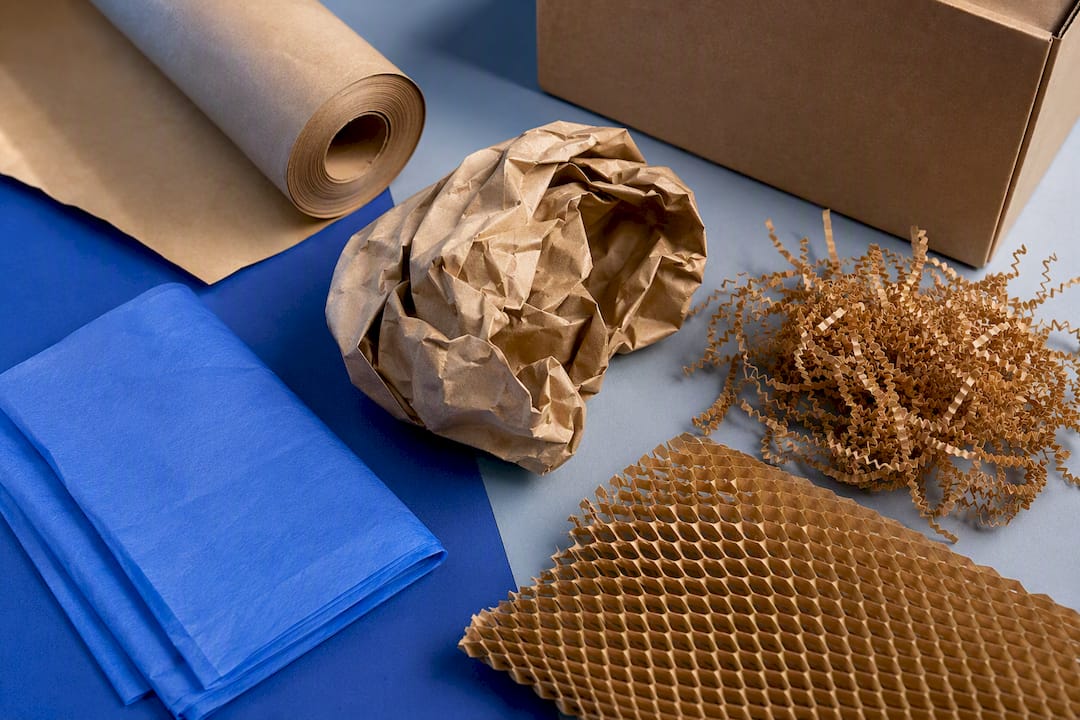
Honeycomb paper is the outlier in this category. Its expandable cell structure gives bubble-wrap-level cushioning while staying fully recyclable, which makes it a strong pick for fragile-but-light items shipped by brands avoiding plastic.
The trade-offs are real. Paper adds bulk faster than air pillows for the same protection level, which can slow pack speed and eat storage space in the form of unexpanded rolls. It’s also worth noting that paper packaging carries a marketing benefit beyond protection: 62% of online shoppers say they’re more likely to reorder from a brand that uses paper-based packaging.
- Kraft paper: cheapest, best for light and low-fragility items
- Crinkle/tissue: presentation-first, minimal cushioning
- Honeycomb: highest protection in the paper category, fully recyclable
Pro Tip: Pre-crumple kraft paper in batches during slow periods. It packs denser and faster than paper crumpled on demand, which speeds up your line during peak volume.
Air Pillows, Air Cushions, and Bubble Wrap
Air pillows are the cost leader among void fill materials, running roughly $0.01 to $0.03 per cubic foot compared to $0.02 to $0.06 for kraft paper. That makes them the default for medium-weight, high-volume operations where every fraction of a cent per shipment adds up across thousands of orders.
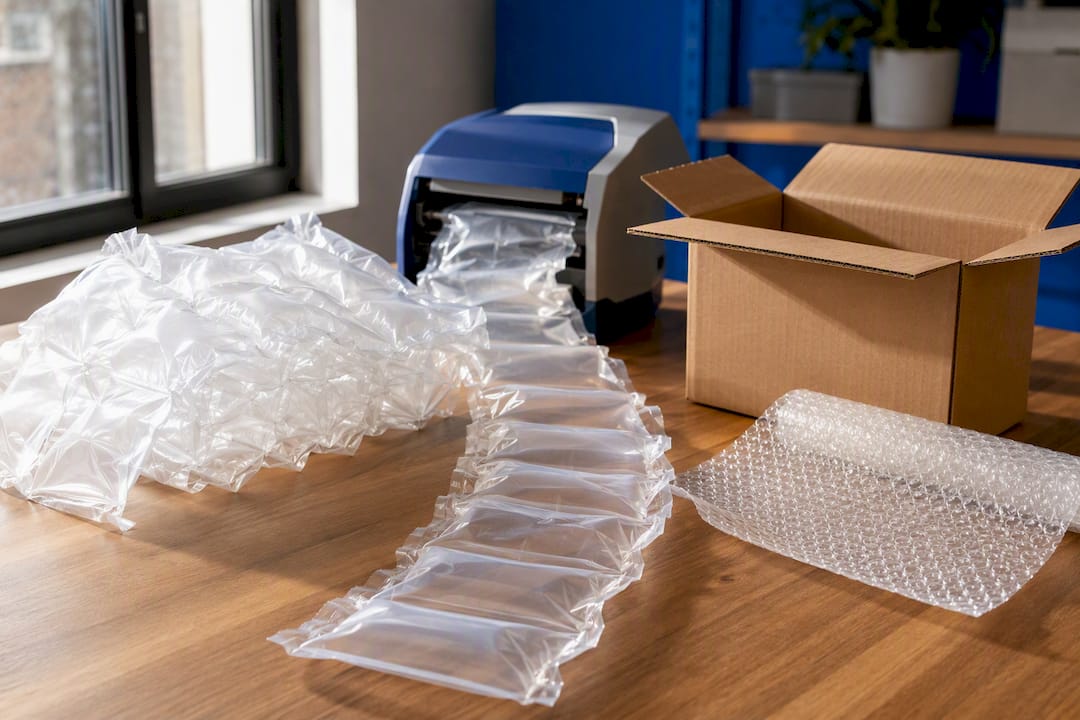
Air cushions serve a different purpose. Larger and firmer than pillows, they’re built for blocking and bracing heavier or irregularly shaped products rather than pure cushioning. Bubble wrap still earns its place for direct wrapping of individually fragile SKUs, and bubble size matters here. Larger bubbles absorb more shock; smaller bubbles wrap tighter around irregular shapes.
The catch with inflatable systems is capital. On-demand inflation machines that convert flat film into pillows on the pack line typically cost $1,500 to $5,000, which only pays off at meaningful order volume. Recycling is another wrinkle. These are LDPE plastics that most curbside programs reject, requiring drop-off at store locations that accept film plastic.
- Air pillows: lowest cost per cubic foot, best for medium-weight volume
- Air cushions: bracing for heavier or irregular items
- Bubble wrap: direct wrap for fragile SKUs, size affects protection level
- Machines: $1,500–$5,000 upfront, LDPE recycling requires drop-off
Foam Options: Peanuts, Rolls, Blocks, and Custom Inserts
EPS packing peanuts still handle jobs paper and air can’t. They fill irregular voids around heavier or oddly shaped products better than almost anything else, but they come with real downsides: static cling, difficult cleanup, and a reputation problem with environmentally conscious customers. Foam rolls and blocks work differently. They brace rather than fill, and they add insulation value that matters for temperature-sensitive shipments.
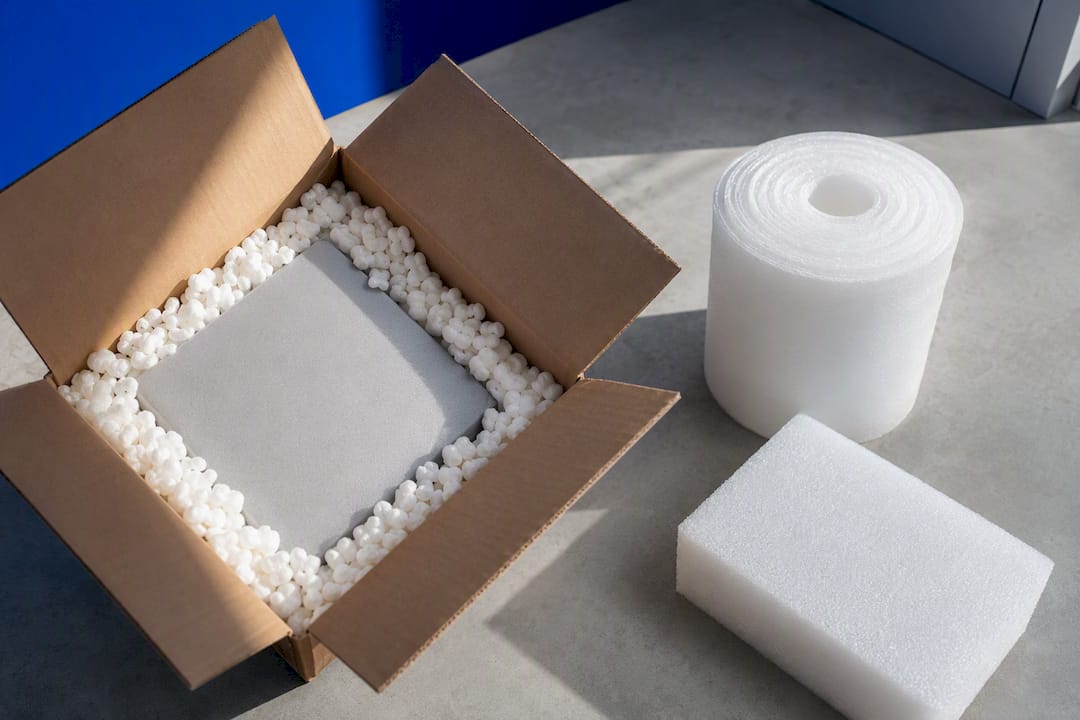
Custom foam inserts are the precision option. Die-cut to a product’s exact shape, they protect high-value or delicate SKUs better than loose fill, but they cost $0.50 to $3.00 per insert depending on complexity, a real jump from the per-cubic-foot pricing of loose materials.
Cornstarch-based biodegradable peanuts are the middle path. Testing referenced in industry sources shows their impact absorption falls within about 7% of traditional EPS for standard e-commerce drop heights, close enough for most applications. The catch is moisture: cornstarch peanuts dissolve in humid or wet conditions, which rules them out for certain shipping routes and climates.
- EPS peanuts: strong protection, static and disposal downsides
- Foam rolls/blocks: bracing and insulation, not pure cushioning
- Custom inserts: precision fit for high-value SKUs, higher per-unit cost
- Cornstarch peanuts: near-EPS performance, fails in humidity
Molded Fiber and Bio-Based Fills on the Horizon
Molded pulp, the material behind egg cartons and bottle trays, offers rigid structural support and recycles through standard paper streams. It works best for products that need a fixed shape held in place rather than loose cushioning, like glass bottles or electronics with defined edges.
Cornstarch peanuts remain the most mature compostable option, with near-EPS protection levels but the same moisture sensitivity noted above. Mycelium-based packaging, grown from fungal material, is the option getting attention in sustainability circles, but it’s not yet priced or scaled for mainstream e-commerce use. Treat it as a future option to watch rather than a current default.
- Molded pulp: rigid support, recyclable, best for fixed-shape items
- Cornstarch peanuts: compostable, moisture-sensitive
- Mycelium: promising but not yet cost-competitive at scale
How to Choose Void Fill for Your Shipments
Match material to weight and fragility first, then adjust for distance and sustainability goals.
- Light, low-fragility items (under 1 lb): Kraft paper or crinkle paper covers most needs and adds brand value at minimal cost.
- Medium-weight items (1 to 10 lbs): Air pillows offer the best cost-per-cubic-foot for high-volume operations shipping standard products.
- Heavy or fragile items (over 10 lbs, or high breakage risk): Foam blocks, air cushions, or custom inserts provide the blocking and bracing lighter materials can’t.
- Long-distance or humid-climate shipments: Avoid cornstarch peanuts, which degrade in moisture; favor paper or EPS instead.
- Sustainability-first brands: Honeycomb paper or cornstarch peanuts, accepting the trade-offs in cost or climate sensitivity.
Volume is the trigger for equipment investment. Below roughly 100 orders per day, manual paper-based systems typically win on total cost because they skip machine amortization entirely. Past that threshold, an air pillow machine starts paying for itself in labor time saved.
Pro Tip: Run a two-week trial with your two finalist materials on the same SKU cohort before committing. Damage-rate differences show up fast, and they’re the only number that actually settles the decision.
Right-Sizing, Placement, and the Packer’s Checklist
Right-sizing the box comes first, before any fill decision matters.
The two-inch rule gives packers a fast mental model: leave roughly two inches of cushioning material between the product and every box wall. Calculate box volume, subtract product volume, and the difference should stay modest, not massive.
Layering strategy matters as much as material choice. Packing teams should place heavier items at the bottom, build a dense base for support, use firmer material for side blocking, add corner protection, and finish with a soft cushion layer on top. Filling only the top of a box leaves products exposed to lateral movement once they settle during transit, which is one of the most common causes of in-transit damage.
- Right-size before adding fill; target under 30% void by volume
- Apply the two-inch rule between product and box wall
- Layer: dense base, firm sides, cushioned top
- Standardize the sequence across every packer on the line to reduce variance
Cost and Sustainability at a Glance
The cost comparison above tells only part of the story. A material that costs more per cubic foot can still win on total cost if it cuts damage claims or drives repeat purchases, which is why the cheapest option per unit isn’t always the cheapest option overall.
How Envio3pl Puts These Rules Into Practice
A fulfillment partner turns void-fill theory into a repeatable process. Envio3pl standardizes fill choices per SKU using live inventory data and SKU profitability analysis, so a fragile, high-margin product gets a custom insert while a durable, low-margin item gets kraft paper, without a packer guessing case by case.
The decision usually comes down to weight, fragility, and order volume for that SKU. A client shipping thousands of small medium-weight orders gets air pillows; a client shipping delicate electronics gets custom foam. Because Envio3pl operates with no long-term contracts and consolidates fulfillment under one vendor, brands avoid the cost creep that comes from managing separate packaging suppliers.
- SKU-level fill rules based on live inventory data
- Material choice driven by weight, fragility, and order volume
- Same-day shipping and fewer vendors to manage
What the Packing Floor Actually Teaches You
Most packaging upgrades fail because nobody measured anything first. Start small: pick one product cohort, test two materials side by side, and track damage rates before rolling a change across your catalog. Audit packers regularly, because inconsistent technique undoes even the best material choice.
— Reddog
Envio3pl: Packaging Expertise Built Into Fulfillment
Sourcing the right void fill at scale is a supply-chain problem, not just a packing-line decision, and that’s where a 3PL earns its cost. Envio3pl handles warehousing, custom packaging, and SKU profitability analysis under one roof, which means the material decisions covered above get applied consistently across every order instead of varying by whoever’s on shift.
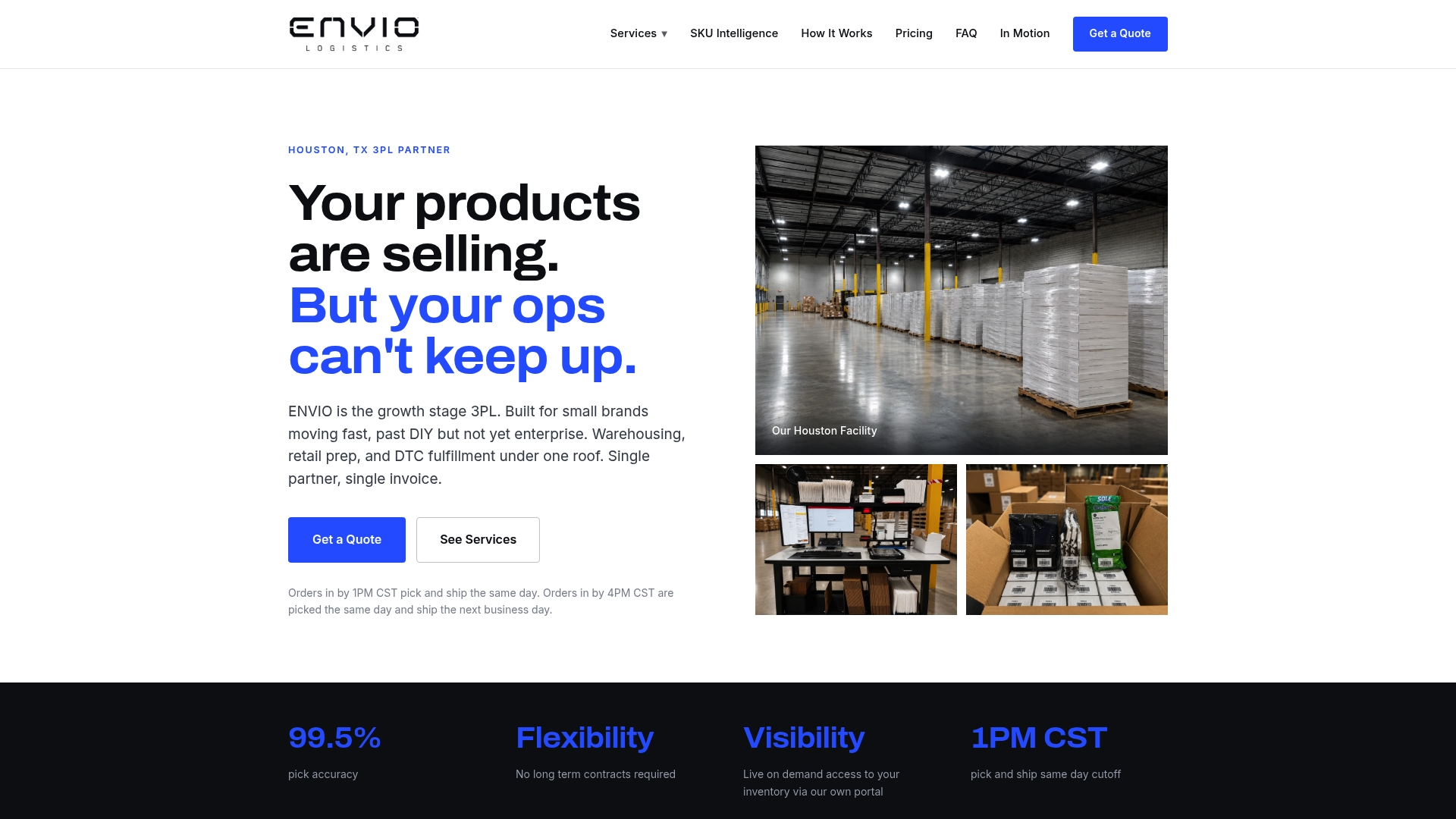
Because Envio3pl sources materials at fulfillment-center scale, brands get better per-unit pricing on paper, air pillows, and custom inserts than most in-house operations can negotiate alone. Same-day shipping for orders placed by 1PM CST means packaging decisions never become the bottleneck. If you’re weighing whether to keep building an in-house packing operation or hand it to a partner that already runs these calculations daily, check Envio3pl’s services and pricing to see what a quote looks like for your order volume.
Sources
- Void fill materials: paper, air pillows, foam comparison | PackageTheWorld
- Using void fill correctly to prevent damage | PackSmart Blog
0 comments